Scoop note
Pangolins: The World’s Only Scaly Mammals
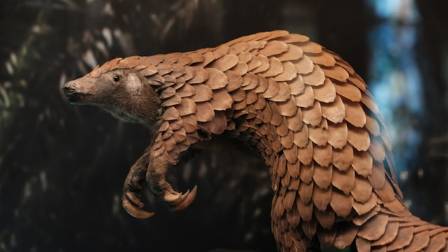
Pangolins are unlike any other mammal on Earth. They are the only mammals whose bodies are protected by overlapping scales from the head all the way to the tail. These unusual animals have many fascinating adaptations, from rolling themselves into a protective ball when threatened to using remarkably long, sticky tongues to collect ants and termites.
Adrian Fox
Cart note
Serving tip
The full scoop write-up continues below on the dessert cart.
Treat
Frozen Fruit Dessert
Pangolins are unlike any other mammal on Earth. They are the only mammals whose bodies are protected by overlapping scales from the head all the way to the tail. These unusual animals have many fascinating adaptations, from rolling themselves into a protective ball when threatened to using remarkably long, sticky tongues to collect ants and termites.
Pangolins occur naturally across parts of Asia and Africa, but their future is seriously threatened by poaching, illegal wildlife trafficking and the destruction of their natural habitats. Here are some fascinating facts about these extraordinary animals.
1. The Name Pangolin Means “One Who Rolls Up”
The word “pangolin” originates from the Malay term pengguling, which means “one who rolls up.” The name describes one of the animal’s most distinctive defensive behaviors.
When a pangolin senses danger, it curls its body into a compact ball, protecting its vulnerable face and underside beneath its overlapping scales. This defensive posture makes it extremely difficult for natural predators, including lions and tigers, to reach the soft parts of its body.
2. There Are Eight Recognized Pangolin Species
Four pangolin species are native to Africa, while another four occur in Asia.
The African species include the black-bellied pangolin (Phataginus tetradactyla), white-bellied pangolin (Phataginus tricuspis), giant ground pangolin (Smutsia gigantea) and Temminck’s ground pangolin (Smutsia temminckii).
The Asian species are the Indian pangolin (Manis crassicaudata), Philippine pangolin (Manis culionensis), Sunda pangolin (Manis javanica) and Chinese pangolin (Manis pentadactyla).
In January 2025, scientists reported evidence of what appears to be another distinct pangolin species, known as the Indo-Burmese pangolin (Manis indoburmanica). Animals previously identified as Chinese pangolins were found to differ substantially from Chinese pangolins, suggesting they may represent a separate species. Researchers still need to conduct further work to understand this potentially newly recognized species.
3. Pangolins Face a Serious Risk of Extinction
Pangolins are distributed across Africa and Asia, but all species face significant pressure from human activities. Illegal hunting, the international wildlife trade and habitat destruction have caused populations to decline.
The exact number of pangolins remaining in the wild is unknown, making it difficult to determine their total population size.
Chinese pangolins and Sunda pangolins are classified as Critically Endangered. Indian pangolins and Philippine pangolins are considered Endangered, while the remaining four species are listed as Vulnerable.
4. Pangolins Are Among the Most Trafficked Mammals on Earth
Pangolins are heavily targeted by illegal wildlife traders because both their scales and meat are sought after. Their scales are used in some traditional medicines, despite lacking scientifically established medicinal benefits, while their meat is regarded as a delicacy in certain places.
It is estimated that roughly 400 pangolins are illegally trafficked each day. This enormous level of exploitation has made pangolins widely regarded as the most heavily trafficked mammals in the world.
5. Ants and Termites Make Up Their Favorite Food
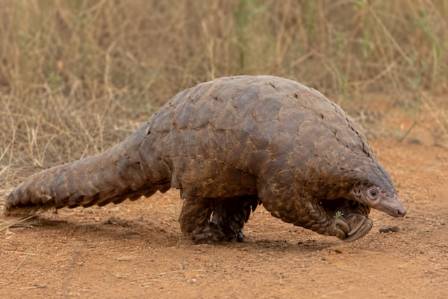
Pangolins are specialized insect eaters, with ants and termites forming the main part of their diet. A single pangolin can consume enormous quantities of insects, potentially eating as many as 70 million insects over the course of a year.
Their powerful front claws allow them to break open ant nests and termite mounds. Once an opening has been created, the pangolin extends its extraordinarily long, adhesive tongue into the nest and collects the insects.
6. They Are the Only Mammals Covered in Scales
Pangolins hold a unique place among mammals because they are the only species in this group to possess protective scales covering most of their bodies.
These scales are composed of keratin, the same structural protein found in human fingernails. The scales and skin together can account for approximately one-quarter of a pangolin’s total body weight.
Their armor provides an effective defense against predators, and even powerful animals such as lions can have difficulty penetrating the thick, overlapping scales.
7. Their Tongues Are Exceptionally Long
A pangolin’s tongue can reach approximately 28 inches, or 70 centimeters, in length. In certain species, the tongue may actually exceed the length of the animal’s body when the tail is not included.
The tongue also has an unusual internal structure. Rather than being attached only within the mouth and throat area like a typical mammalian tongue, a pangolin’s tongue extends deep into the body and is connected near the ribcage.
This remarkable adaptation allows the animal to reach deep into ant and termite colonies while feeding.
8. Their Scales Can Also Help Them Collect Ants
Pangolin scales are not used solely as armor. Chinese pangolins have been observed using their scales in an unusual feeding technique.
When searching for ants, they may lie on the ground and partially open their scales. Ants disturbed from their nest can then climb onto the pangolin’s body and become trapped between the scales.
The pangolin subsequently closes its scales and moves toward water. Once it reaches the water, it opens the scales again, allowing the trapped ants to fall into the water, where the pangolin can then eat them.
9. Pangolins Do Not Have Teeth
Pangolins are unable to chew their food because they have no teeth. Instead, they rely on a specialized digestive system to process the insects they consume.
Their muscular stomach contains small stones that help break down and grind their food. This method is somewhat similar to the way certain birds use stones in their digestive systems to help process food.
10. “Scaly Anteater” Is a Misleading Nickname
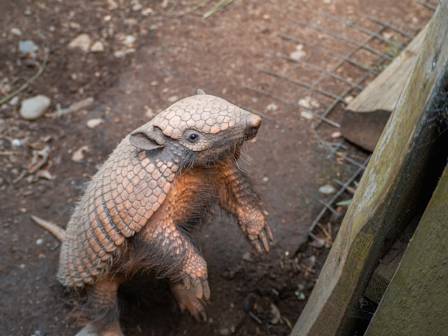
Pangolins are sometimes called “scaly anteaters” because their appearance, diet and insect-eating habits resemble those of anteaters. They also share certain similarities with armadillos.
However, these animals are not close relatives. Pangolins are actually more closely related to carnivorous mammals such as cats, dogs and bears.
The similarities between pangolins and anteaters developed independently as a result of convergent evolution. In other words, they evolved comparable physical features and feeding strategies because they adapted to similar ecological challenges rather than because they inherited these traits from a common close ancestor.
More from the cart
Cup · en

Convertible Buying Guide
Driving with the roof down on a sunny day delivers a unique kind of enjoyment that few other driving experiences can match. Lowering the top on a roadster, feeling warm air flow through the cabin, catching the scent of freshly cut grass, and listening to the engine’s mechanical rhythm as you glide along the road creates a sense of freedom that stands apart from ordinary motoring.
Cup · en

Subtly Sweet Chinese Pastries And Desserts
Growing up in a Chinese-American household, traditional sweets were a rare treat. Desserts usually appeared only on special occasions—during gift-giving holidays like the Mid-Autumn Festival, we’d receive ornate tins of mooncakes filled with smooth lotus paste, and major birthday parties meant sponge cakes infused with custardy durian.
Cup · en

Most Beautiful Danxia Landforms in China
China Danxia Landform refers to a unique type of landscape formed from reddish continental sandstone and conglomerate, often known as “red beds.” These spectacular geological formations are mainly found in southern China and are famous for their colorful cliffs, unusual rock shapes, and dramatic scenery.
Cup · en
The Most Majestic Feline Companions
Renowned for their impressive size and gentle demeanor, Maine Coon cats have captured the hearts of feline enthusiasts worldwide. Far more than just large pets, these magnificent creatures combine a dog-like loyalty with a regal presence, making them truly unique companions. With their luxurious coats, striking patterns, and affable personalities, Maine Coons represent one of the most beloved and distinctive cat breeds in existence today.
Cup · en
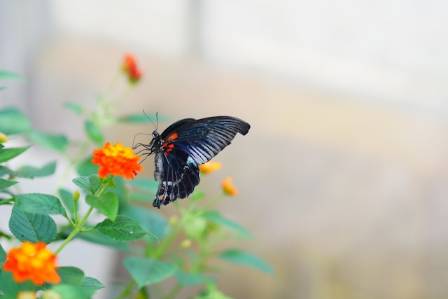
Learning About the Great Mormon Butterfly Identification Features Facts and Visuals
The Great Mormon Butterfly, scientifically known as Papilio memnon, is a fascinating member of the swallowtail butterfly family. It draws attention from butterfly lovers and scientists alike because of its substantial size and eye-catching looks. What makes this butterfly even more interesting is its wide presence across South and Southeast Asia, along with unique behaviors like mud-puddling—where it gathers with other butterflies to extract minerals from damp soil. Its ability to thrive in various countries and different types of habitats not only highlights its importance in the ecosystem but also shows how well it can adapt to changing surroundings.
Cup · en

Bionic Hands in Action
A bionic hand is a powered artificial limb created to replace a missing human hand. Unlike conventional prosthetic devices such as cosmetic hands or body-operated hooks, bionic hands contain electronic systems, motors, and computer processors. These components allow the device to move actively and imitate many of the functions of a natural hand.