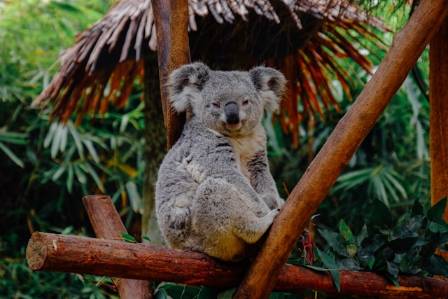
The cute and cuddly koala is one of Australia's most iconic and beloved native animals. Renowned for their fuzzy round ears, button-like eyes, and prominent black noses, these tree-dwelling marsupials have captured the hearts of people worldwide. Yet beyond their adorable appearance lies a wealth of fascinating traits and behaviors that make them truly unique in the animal kingdom. From their specialized diet to their solitary lifestyle, koalas are far more complex than they might seem at first glance.
Koalas Are Marsupials, Not Bears
You’ve probably heard these fluffy creatures called “koala bears” before, a nickname that stems from their teddy bear-like looks—with their round faces, soft fur, and stocky builds. However, this label is a complete misnomer. Koalas are not bears at all; they are marsupials, a distinct group of mammals characterized by giving birth to underdeveloped young that then complete their growth in a maternal pouch. This places koalas in the same biological class as wombats, kangaroos, and wallabies, rather than bears, which are placental mammals. Unlike bears, which are active hunters with diverse diets, koalas have evolved to thrive on a highly specialized diet of eucalyptus leaves, a trait that sets them apart from their distant mammalian relatives.
They Are Extremely Picky Eaters
Koalas are true dietary specialists, surviving exclusively on a diet of eucalyptus leaves. An adult koala can consume up to one kilogram (over two pounds) of these leaves each day, a substantial amount considering their relatively small size. However, their eating habits are far from indiscriminate. There are over 700 species of eucalyptus trees in Australia, but koalas will only feed on fewer than 50 of these varieties. What’s more, they are selective about which parts of the tree to eat: they prefer leaves from the upper canopy of the tallest trees, as these leaves contain higher concentrations of moisture and nutrients, and lower levels of the toxic compounds that make eucalyptus inedible for most other animals. This careful selection ensures that koalas get the maximum nutritional benefit while minimizing their exposure to harmful substances.
Koalas Sleep Up to 18 Hours a Day
If you picture a koala, you likely imagine it curled up asleep in the fork of a eucalyptus tree—and for good reason. These marsupials spend between 18 and 22 hours each day resting or sleeping, making them one of the sleepiest animals on the planet. The reason for this extreme lethargy lies in their diet. Eucalyptus leaves are low in calories and nutrients, and they are also tough to digest, thanks to their high fiber and lignin content. To conserve the limited energy they get from their food, koalas have evolved to lead a largely sedentary lifestyle. Sleeping for long stretches allows their slow metabolic rate to efficiently process the leaves, ensuring they extract every bit of available energy without expending unnecessary effort on movement.
Koalas Smell Like Eucalyptus
Spending nearly their entire lives in eucalyptus trees has left a lasting impression on koalas—literally, in the form of their scent. Most koalas carry a subtle, fresh aroma of eucalyptus, a natural byproduct of their diet and habitat. This scent serves a practical purpose beyond just smelling pleasant: it acts as a natural insect repellent, keeping pesky bugs at bay and reducing the risk of bites and infections. There is a notable difference in scent between male and female koalas, however. Young koalas and females have a mild, leafy fragrance, while adult males emit a much stronger, muskier odor. This powerful scent is produced by a gland on their chest, which they rub against tree trunks to mark their territory and signal their presence to other koalas.
They Produce Unusually Strange Sounds
Don’t be fooled by their cute and quiet appearance—koalas are capable of making some of the most unexpected and unsettling sounds in the Australian bush. While they are generally silent animals, male koalas, in particular, are vocal creatures, especially during the breeding season. They possess a unique set of vocal folds that allow them to produce deep, resonant bellowing or grunting calls that can travel several kilometers through the forest. These calls are not just random noises; they serve a critical purpose in koala society. Males use them to attract females and to warn rival males to stay out of their territory. The low, rumbling sound is surprisingly loud for an animal of their size, and it can often be heard echoing through the trees at sunrise and sunset.
Koalas Are Solitary Creatures
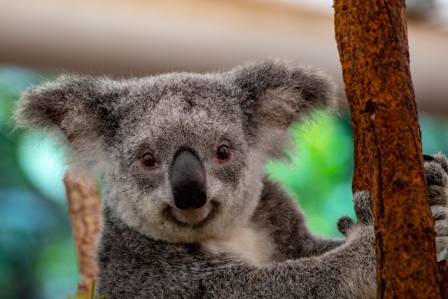
Koalas are inherently solitary animals, preferring to spend most of their lives alone rather than in groups. They occupy overlapping home ranges, areas of forest that they use for feeding, sleeping, and breeding, but they rarely interact with other koalas outside of mating season. The size of a koala’s home range varies depending on several factors: gender, age, social status, and the quality of the habitat. Dominant adult males typically have the largest home ranges, which are respected by neighboring males, who will avoid encroaching on these territories to prevent conflict. Female koalas, on the other hand, tend to be more sedentary, often staying within the same area where they were born for their entire lives. Young males, once they reach maturity, will leave their mother’s range to find their own territory, embarking on long journeys in search of new habitat.
Koala Joeys Are Born Underdeveloped
Baby koalas, called joeys, enter the world in an extremely immature state—even more so than other marsupial young. When a joey is born, it is no bigger than a peanut, weighing just a fraction of a gram. It is completely hairless, blind, and deaf, with only its front limbs fully developed. Despite these limitations, the joey relies on its natural instincts to make a remarkable journey: it crawls from the birth canal up to its mother’s pouch, a journey that can take several minutes. Once inside the pouch, it attaches itself to one of the mother’s teats, which swells in its mouth to keep it securely in place. The joey will remain in the pouch for the next six months, growing and developing rapidly. During this time, it will develop fur, eyesight, and hearing, and by the time it emerges, it will look like a miniature version of an adult koala.
The Name “Koala” Has Aboriginal Roots
The word “koala” has a rich cultural history, originating from the language of the Darug people, an Aboriginal group from the Sydney basin area of Australia. The Darug word gula or gulamany translates to “no water,” a name that perfectly describes the koala’s unique relationship with hydration. Unlike most animals, koalas rarely drink water from pools or streams. Instead, they get almost all the moisture they need from the eucalyptus leaves they eat, which contain high levels of water. In addition to this, koalas will lick rainwater that runs down the smooth bark of eucalyptus trees during or after storms, supplementing their water intake. This adaptation allows them to survive in the dry Australian bush, where free-standing water can be scarce for long periods.
Koalas Can Live Over a Decade in the Wild
The lifespan of a koala varies depending on its gender and living conditions. In the wild, the average koala lives between 10 and 12 years. Females, however, tend to live longer than males, with some individuals reaching up to 18 years of age. This difference is likely due to the fact that males face more risks in the wild, such as fighting with other males during breeding season, which can lead to injuries, and covering larger distances in search of mates, increasing their exposure to predators and accidents. Koalas reach sexual maturity at around two to three years of age. Young joeys stay with their mothers for about a year after leaving the pouch, learning essential survival skills like which leaves to eat and where to find the best trees. Once they are independent, they will set off to establish their own home ranges.
Koalas Have Fingerprints Just Like Humans
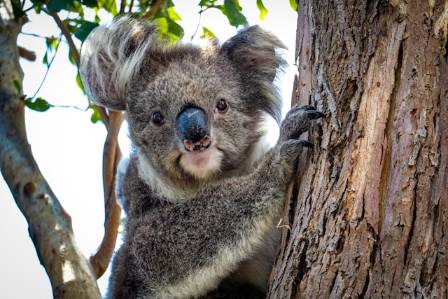
One of the most surprising facts about koalas is that they have fingerprints that are almost identical to those of humans. Each koala’s fingerprints are unique, with the same ridge patterns, loops, and whorls that characterize human fingerprints. In fact, the similarity is so striking that it can be difficult for forensic experts to tell the difference between a koala’s fingerprint and a human’s, especially under a microscope. This is a remarkable example of convergent evolution—the process by which unrelated species develop similar traits independently. Koalas use their fingerprints to grip tree branches securely, a critical skill for an animal that spends its entire life in the trees. They also have an unusual hand structure: two thumbs on each front paw, which help them climb and grasp leaves with precision.