5 Things You Need to Know About the Mexican Prairie Dog

Scoop note

5 Things You Need to Know About the Mexican Prairie Dog

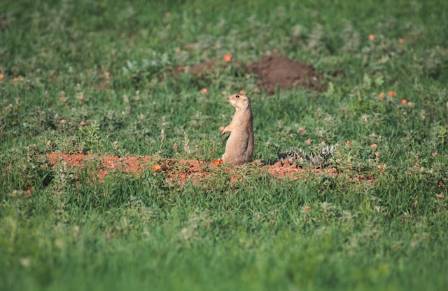
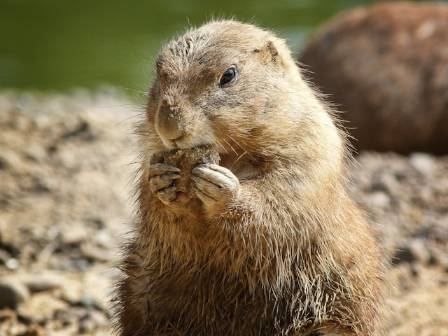
The Mexican prairie dog (Cynomys mexicanus) is native exclusively to Mexico, occupying a narrow area of roughly 500 square kilometers in the country’s northwest. This range spans the states of Coahuila, Nuevo León, and San Luis Potosí—though historically, the species also lived in Zacatecas.

J

Jessica Thomas

Cart note

Serving tip

The full scoop write-up continues below on the dessert cart.

Treat

Frozen Fruit Dessert

Geographic Range and Distribution

The Mexican prairie dog (Cynomys mexicanus) is native exclusively to Mexico, occupying a narrow area of roughly 500 square kilometers in the country’s northwest. This range spans the states of Coahuila, Nuevo León, and San Luis Potosí—though historically, the species also lived in Zacatecas. Today, 74% of its habitat lies in Nuevo León, 24% in Coahuila, and just 2% in San Luis Potosí.
Its spread is bounded by natural barriers: the Sierra Madre Oriental to the north and west, and semi-arid hills and grasslands to the south and east. Notably, this prairie dog has never been introduced to any other part of the world.

Habitat Preferences and Environmental Adaptations

Mexican prairie dogs live at elevations between 1,600 and 2,200 meters. They are confined to six large, dry grassland valleys and intermontane basins in Mexico—specifically within the Mexican Plateau. These grasslands sit at the base of larger valleys and basins, forming part of a semi-arid shrub mosaic.
They have a strong association with gypsum soil outcrops, which are low in fertility. The gypsum rock in these soils comes from eroded marine sediments deposited during the Pleistocene epoch. Their habitat is often surrounded by arid scrub and features short grasses typical of calcareous and gypsophyllum soils, such as creeping muhly (Muhlenbergia repens) and burrograss (Scleropogon brevifolius).
The species digs exploratory burrows in rocky, sandy, and clay soils, though very sandy soils are unsuitable for burrowing. They may settle or re-settle former farmlands if the soil offers good structural support and enough depth for burrowing. Like all prairie dog species, they avoid steep slopes—these areas reduce their ability to spot predators and are often too rocky to support fossorial (burrowing) life.

Physical Characteristics and Size

The Mexican prairie dog is one of the largest in the Cynomys genus, only slightly smaller than the black-tailed prairie dog—its closest relative, from which it is thought to have split around 42,000 years ago.
Adults weigh 300 to 900 grams in spring and 500 to 2,000 grams in fall. Their total length ranges from 385 to 440 millimeters, and they stand about 30 centimeters tall when upright. Males and females share similar coloration, but males are roughly 15% larger. Individuals from the southern edge of their range tend to be bigger than those in northern areas.
Like black-tailed prairie dogs, they have two distinct coats: a summer coat and a winter coat with thick underfur. A key identifying feature is their black-tipped tail (the distal half is black), which sets them apart from most other Cynomys species. They also have blunt noses, small mouse-like ears, five digits per foot (each with a thick, curved black claw), and long black whiskers that can reach 3 centimeters.
Their fur has a grizzled look because each hair has four color bands: black at the base (proximal end), followed by white, red, and yellow at the tip. The tail—making up over 20% of their total body length—measures 83 to 115 millimeters and has black hairs along its sides (lateral margins) and tip. Unlike black-tailed and white-tailed prairie dogs, they lack a black or dark brown stripe above the eyes.

Molting Patterns

Mexican prairie dogs molt twice a year. Their spring coat, fully grown by March or April, is thick with dense underfur. They start shedding this coat in September, and by early November, most individuals have a complete winter coat—equipped with thick underfur to trap heat.
Each molt lasts about two weeks. Unlike other Cynomys species, which shed from front to back (anteriorly to posteriorly), Mexican prairie dogs shed in an irregular, patchy pattern.

Sensory and Dental Traits

The species has large auditory bullae (hollow structures in the skull) that let them hear sounds from 29 to 26,000 Hz, with peak sensitivity between 500 and 4,000 Hz. They have triangular cheek teeth and broad noses (nasals) that are cut off at the back (posteriorly truncated).
Like other Cynomys species, they have wide zygomatic arches (cheekbones) and well-defined zygomatic processes (bony projections). Their dental formula is I 1/1, C 0/0, P 1/1, M 3/3—totaling 20 teeth. Their upper incisors are bright yellow and have grooves on their inner surfaces. Juveniles develop a full set of permanent teeth within 2 to 3 months of leaving their burrow for the first time (during their first year of life).

More from the cart

🍧

Cup · en

A Complete Guide to Domestic Geese

A Complete Guide to Domestic Geese

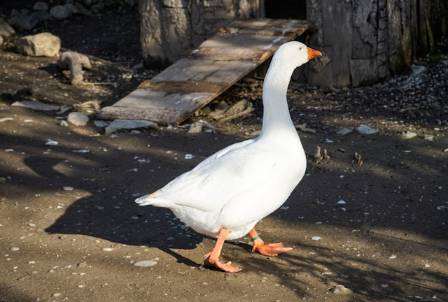
Have you ever thought about raising domestic geese? These feathered companions have been part of human culture for hundreds of years, providing meat, eggs, and even warm feathers. In this guide, we’ll cover everything you need to know about domestic geese—from their different breeds and behaviors to how they’re used by humans.

🍧

Cup · en

Cultivating The Elegant And Tranquil Peace Lily

Cultivating The Elegant And Tranquil Peace Lily

These remarkable plants bring a calm and tropical atmosphere to any indoor space, earning their common name because their pristine white spathes resemble traditional flags of truce, even though they are technically tropical aroids rather than true lilies. With proper care, these resilient plants can thrive for many years and produce continuous, elegant blooms. They are exceptionally well-suited for homes and offices because they tolerate lower light conditions and actively filter airborne dust and mold spores from the environment. Growing between one and four feet tall, they feature striking dark green foliage that beautifully contrasts with their bright white flowers, making them a stunning addition to any interior design.

🍧

Cup · en

Transform Your Space with Tree Tapestries

Transform Your Space with Tree Tapestries

Creating a peaceful and welcoming interior often starts with incorporating natural elements into your décor. Tree-themed tapestries are a simple yet impactful way to achieve this. These decorative wall hangings showcase the beauty of forests, branches, and botanical imagery while adding texture, warmth, and personality to any room.

🍧

Cup · en

Understanding the Nature of Grasslands

Understanding the Nature of Grasslands

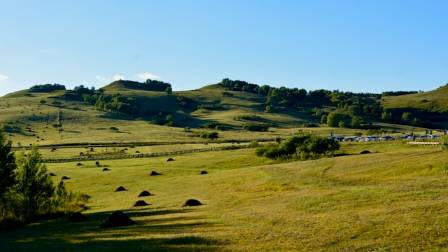
Before identifying the globe’s most expansive grasslands, it's essential to clarify what constitutes a grassland. These ecosystems are immense open regions where the primary vegetation is grass, stretching across vast distances. Grasslands typically form in regions where rainfall is moderate—not sufficient to support forests but enough to prevent the terrain from becoming a desert. They are characteristic of zones with semi-dry to semi-wet climates.

🍧

Cup · en

Red Rock Canyon

Red Rock Canyon

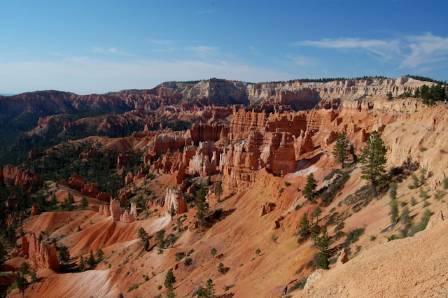
One of the most spectacular destinations in southern Nevada, Red Rock Canyon attracts both local residents and travelers from around the world. Known for its dramatic red cliffs, towering sandstone formations, and ancient Native American rock art, this breathtaking desert landscape welcomes nearly two million visitors every year.

🍧

Cup · en

6 Iconic Marvels of Ottoman Architecture

6 Iconic Marvels of Ottoman Architecture

The Ottoman Empire left behind an extraordinary architectural legacy that blended Islamic, Persian, and Byzantine influences. From mosques to palaces, bridges to caravanserais, these structures were more than just buildings—they were symbols of imperial ambition, artistic vision, and cultural power. Here are six highlights that showcase the brilliance of Ottoman design.